It starts with menus. Then medicine bottles. Eventually, your phone might as well be in hieroglyphics. One day, you’re mocking your parents’ reading glasses, and the next, you’re wearing a pair that looks suspiciously like theirs.
But what if—stay with me here—you could sharpen close-up vision without those glasses sliding down your nose every 12 seconds?
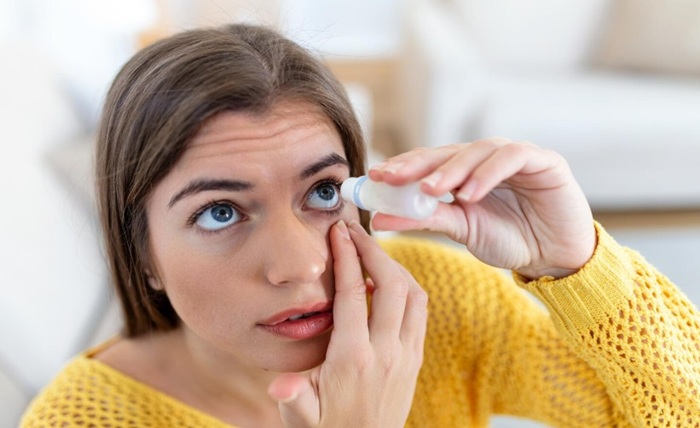
Turns out, science cooked up an alternative: prescription eye drops that literally train your pupils to do the heavy lifting. No lasers. No lenses. Just… drops.
Let’s talk about how these things actually work—and why they’re not some snake oil in a sterile bottle, or you can see more at VIZZ.
The Lens Isn’t Broken. It’s Just Tired.
Presbyopia is the technical term, but it might as well be called middle-age eye betrayal.
After 40, your eye’s natural lens loses elasticity. It used to flex like a trampoline; now it’s more like a crusty rubber band. This makes switching focus from far to near a struggle—like your eyes are buffering.
Reading glasses patch the problem. But they don’t fix the cause. And they definitely don’t fit in a pocket without a case the size of a mini tablet.
The Pupil Trick: Smaller Hole, Sharper Focus
Here’s where the prescription drops get clever.
Formulations like pilocarpine (shoutout to Vuity™, the FDA-approved MVP) work by constricting your pupils. That’s right—your pupil, the black center of your eye, tightens up like a camera aperture. Narrower opening = increased depth of field.
So more things are in focus. Close-up things. Like your book, phone, or the instructions for assembling that IKEA shelf you thought you didn’t need help with. (You did.)
Result? Hours of glasses-free clarity. No magic. Just optics.
Is It a Cure ? Not Exactly.
Let’s be clear: these drops aren’t permanent, and they don’t reverse aging. You’re still 45. Sorry.
But they do give you 6 to 10 hours of sharper near vision. That’s a full workday—or a date night where you want to read the wine list without pulling out drugstore readers.
Side effects? Minor for most. Maybe a headache. Some dimness in low light. Nothing dramatic, but don’t try threading a needle by candlelight.
Also: if you have certain eye conditions—like chronic dry eye or retinal issues—this may not be your jam. Talk to your eye doc.
Why Not Just Stick With Glasses?
Because they’re annoying. Because you forget them. Because they fog up when you sip soup or wear a mask. Because you’re vain. (Admit it.)
More importantly? These drops feel like a 21st-century solution to a very human problem. No hinges. No lost frames. Just chemistry doing what it does best: solving things invisibly.
And Yes, It’s Just the Beginning
Pharma isn’t stopping with one trick pony eye drops. Researchers are already working on combo formulas—ones that enhance accommodation, reduce inflammation, and last longer.
It’s not just about reading menus anymore. It’s about giving people options. Maybe one day, glasses will be a style choice—not a necessity.
Companies like VIZZ are watching this frontier closely. And frankly, so should you.
Final Thought?
If you’re still peeking over the top of your glasses like a skeptical librarian… I get it. But don’t sleep on this. Prescription eye drops are rewriting how we think about vision correction—one blink at a time.
Now, go ahead. Read the fine print.
(No glasses required.)