
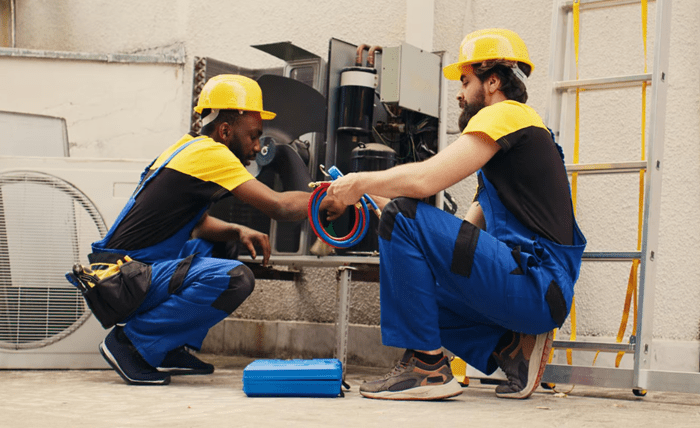
Commercial properties need steady climate control, clean air, and safe equipment every workday. Facility managers depend on expert HVAC service to protect comfort, control costs, and prevent equipment strain. Routine system checks help prevent small faults from becoming costly repairs. A clear maintenance plan helps each building support employees, visitors, tenants, and critical operations. Read this article to learn how skilled contractors help commercial spaces stay efficient and safe.
Preventive Service Plans Improve Equipment Performance
In safe facility care, the role of commercial HVAC contractors starts with planned service. Their teams inspect coils, belts, motors, drains, filters, and electrical connections. This process helps equipment run within safe temperature and pressure ranges.
Key service benefits include these steps:
- Technicians test thermostat response, airflow levels, refrigerant charge, and safety controls.
- Clean filters and coils help reduce strain on fans and compressors.
- Detailed reports help managers plan repairs before equipment stress becomes severe.
Scheduled service helps extend equipment life across offices, schools, clinics, and warehouses.
Air Quality Standards Protect Occupant Health
Indoor air quality affects comfort, health, odor control, and daily productivity. Contractors check filtration levels, ventilation rates, humidity balance, and duct conditions. Proper filtration helps capture dust, pollen, mold spores, and fine particles. Clean airflow helps reduce odors across busy commercial spaces.
Balanced ventilation brings fresh air into occupied areas at safe volumes. Humidity control helps prevent mold growth near coils, drains, and duct surfaces. These steps support healthier rooms, cleaner surfaces, and steadier indoor comfort.
Energy Audits Reduce Utility Waste
Commercial HVAC systems use large amounts of power during busy workdays. Contractors review utility bills, equipment age, runtime data, and zone demand. They identify worn parts, poor calibration, duct leaks, and control errors.
Key audit benefits include these actions:
- Accurate thermostat settings prevent excess runtime across low-traffic facility zones.
- Sealed ducts help conditioned air reach rooms at proper volumes.
- Motor tests reveal electrical strain before repair costs increase sharply.
Energy audits create a practical plan for lower monthly utility costs. Clear data helps teams choose repairs, tuneups, or replacements with confidence. Each action supports efficient operation without harm to occupant comfort.
Emergency Repairs Prevent Mechanical Failures
Unexpected HVAC faults can affect tenants, equipment, inventory, and safety systems. A commercial HVAC contractor can diagnose failed motors, leaks, sensors, and controls. Technicians trace faults through electrical tests and system performance checks. Accurate diagnosis helps crews choose the correct repair method.
Rapid repairs help restore climate control before damage spreads across equipment. Clear communication keeps property managers aware of repair status and cost details. Reliable emergency service helps facilities maintain safe access during peak demand periods.
System Controls Maintain Stable Conditions
Smart control systems help facilities hold consistent temperatures across separate zones. Contractors calibrate sensors, schedules, dampers, and programmable thermostats for accurate response. Proper controls prevent hot spots, short cycles, excess runtime, and comfort complaints. Correct schedules keep equipment aligned with actual facility use.
They help staff match HVAC output with occupancy, hours, and room purpose. Accurate controls protect equipment because systems avoid needless starts and stops. This setup supports stable comfort, lower energy use, and safer equipment operation.
Modern Upgrades Improve Facility Operations
Older HVAC equipment can strain budgets, staff schedules, and comfort plans. Contractors assess system age, repair history, efficiency ratings, and facility demands. They recommend replacements when repairs no longer support reliable daily operation.
Modern units can deliver better airflow control, quieter performance, and safer operation. New equipment can reduce service disruptions and support smoother daily facility management. Upgrade plans help managers stage expenses across planned budget cycles. Proper installation protects warranties, code compliance, and long-term system performance.
Efficient and safe commercial spaces depend on disciplined HVAC care. Regular service keeps major equipment ready for daily operational demands. A trusted provider can assess current systems and recommend practical next steps. In planned facility maintenance, the role of commercial HVAC contractors supports comfort and cost control. Facility managers can book a professional system review for clear guidance. Strong HVAC care supports dependable spaces, healthier air, and efficient daily operations.