You might be feeling a mix of worry and confusion right now. Maybe you lost a tooth in an accident. Maybe years of dental problems have finally caught up with you. Or you have been told you need surgery for your jaw, gums, or multiple missing teeth, and the word “surgery” alone is enough to make your chest tighten. When you’re looking for an Oral Surgeon for Bernards NJ, these feelings can be especially overwhelming.
It often starts with something small. A tooth that cracks. A denture that never quite fits. A smile you slowly start to hide in photos. Over time, chewing becomes harder, your bite feels off, and you might even notice changes in your face shape. By the time someone mentions an oral surgeon, you may already feel exhausted and a bit overwhelmed.
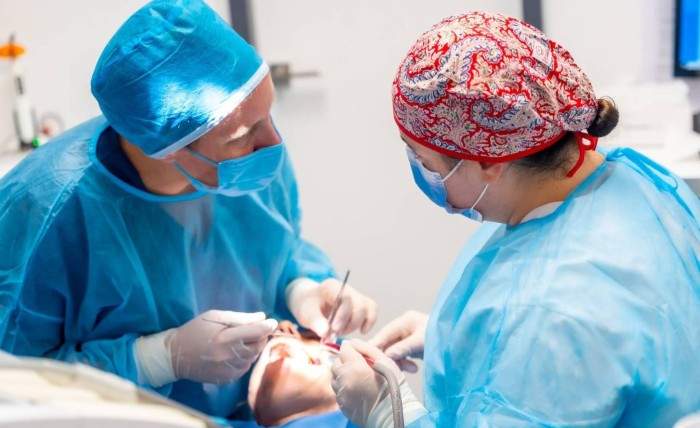
Here is the short version of what you need to know. An oral and maxillofacial surgeon is a dentist with advanced surgical training who focuses on repairing and rebuilding the structures of your mouth, jaw, and face. In reconstructive dental procedures, they work to restore function first, then appearance, often using dental implants, bone grafts, and jaw surgery. You do not have to know all the technical terms. You just need to understand that there is a path forward, and you do not have to walk it alone.
So where does that leave you when you are staring at treatment plans, second opinions, and a lot of “what ifs” in your mind?
Why does reconstructive dental work feel so overwhelming?
The stress is rarely just about teeth. It is about how you eat, how you speak, how you look, and how you feel about yourself. When a dentist says you might need a surgical solution, you may start worrying about pain, cost, and time away from work. You might even wonder if you did something wrong to “end up here.”
Reconstructive dental problems can show up in many ways. Maybe you had multiple extractions and now your denture moves when you talk. Maybe you had an infection that damaged bone. Maybe you were born with a jaw difference that affects your bite and your confidence. In each of these situations, a general dentist can only go so far. At some point, you need someone who is trained to repair the foundation, not just the surface.
That is where an oral surgeon and implant dentist usually steps in. They focus on the deeper structures. The bone that holds the teeth. The jaw joint that lets you chew. The nerves that let you feel your lips and tongue. According to standard medical references on oral surgery, such as the overview of oral surgery procedures on MedlinePlus, their work ranges from simple tooth removal to complex reconstruction of the jaw and face.
Because of this, you might be asking yourself a hard question. Is surgery really necessary, or is there another way?
What exactly does an oral surgeon do in reconstructive dentistry?
Think of reconstructive dental care as building a house on a damaged foundation. A filling or crown is like repainting a room. Implants, bone grafts, and jaw surgery are more like fixing the foundation so the entire structure can stand firmly again.
In reconstructive oral surgery, the surgeon’s role often includes:
- Removing damaged or infected teeth when they cannot be saved.
- Placing dental implants into the jawbone to replace missing roots.
- Rebuilding lost bone with grafts so implants or dentures have support.
- Correcting jaw alignment so the teeth meet properly and the face looks balanced.
- Repairing issues caused by trauma, such as fractures or lost teeth.
Often, the oral surgeon works closely with your general dentist or prosthodontist. The surgeon repairs and prepares the foundation. The restoring dentist designs the final teeth, crowns, or dentures that you see in the mirror. When this partnership is strong, the final result usually feels more natural and lasts longer.
The American Association of Oral and Maxillofacial Surgeons describes this team-based approach in their overview of training and scope of practice, which you can read in their Essentials of Oral and Maxillofacial Surgery guide. This kind of training is what allows an oral surgeon to handle both routine and very complex reconstructive cases with a strong focus on safety and long term function.
Still, you might be wondering. Is it worth going to a specialist, or could a non surgical option be enough for now?
How do oral surgeons compare to “quick fix” options for missing or damaged teeth?
When you are tired and stressed, it is tempting to choose the fastest or cheapest option. Maybe that means a removable denture instead of implants, or a cosmetic fix that hides a problem rather than repairing it. Sometimes that is perfectly reasonable. Other times it simply delays a bigger issue.
The table below can help you compare common paths people consider when facing reconstructive dental decisions.
| Approach | What it usually involves | Short term benefits | Long term considerations |
|---|---|---|---|
| Doing nothing for now | Ignoring missing or broken teeth, postponing treatment | No immediate cost, no appointments | Bone loss in the jaw, shifting teeth, bite problems, harder and more expensive treatment later |
| Removable dentures or partials only | Appliances that sit on top of gums without implants | Lower upfront cost, non surgical, quicker result | Less stable for chewing, ongoing adjustments, bone loss continues under the denture |
| General dentist treatment only | Fillings, crowns, simple extractions, basic bridges | Familiar office, can be right for mild problems | May not address deep bone or jaw issues, complex cases may be beyond their training |
| Reconstructive treatment with an oral surgeon | Implants, bone grafts, jaw surgery, coordinated care with your dentist | Sturdier foundation, more stable chewing, tailored plan for complex issues | Higher upfront cost, more appointments, but often better function and durability over time |
The right path depends on your health, your budget, and your goals. For some people, a removable denture is enough. For others, especially those who want long term stability, working with an oral surgeon for implant based reconstruction is the option that matches how they want to live and eat.
If you are wondering how to judge the quality or safety of a surgeon, one helpful resource is the American Board of Oral and Maxillofacial Surgery, which offers clear patient information about training and board certification. This can help you feel more confident that the person treating you has met rigorous standards.
What practical steps should you consider before choosing surgery?
When there are so many opinions and options, it helps to slow down and get practical. Surgery is significant. You deserve to feel informed, not rushed.
Here are some real life questions many people face:
- “If I choose implants, how long will I be without teeth, and what will I look like in the meantime?”
- “How will I manage work, childcare, or caregiving while I recover?”
- “What if something goes wrong during surgery?”
- “Can I really afford this, and what happens if I wait another year?”
None of these questions are silly. They are exactly the questions that should be on the table during your consultation. A skilled surgeon will talk about risks, benefits, healing time, and backup plans in plain language, not dental jargon.
So how can you move from fear and confusion toward a plan that feels steady and realistic?
Three concrete steps to move forward with reconstructive oral surgery decisions
- Get a detailed diagnosis, not just a quick quote
Before you decide on any major reconstructive dental surgery, insist on a proper workup. That usually means a full exam, updated X rays, and often a 3D scan of your jaws. Ask the surgeon to explain what they see and how it connects to your symptoms. For example, if you have trouble chewing on one side, ask them to point out on the scan what is causing that.
A clear diagnosis turns a vague fear into a specific problem that can be addressed. It also helps you compare treatment plans from different providers more fairly.
- Ask about all reasonable options, including “good, better, best” plans
A trustworthy surgeon will not pressure you into the most expensive plan. Instead, they can outline a range. For example:
- A basic plan that solves the urgent problem, such as removing infected teeth and providing a temporary denture.
- A mid level plan that adds some implants for stability.
- A full reconstruction plan with multiple implants and fixed teeth.
When you see the options laid out side by side, you can choose what matches your health, timeline, and budget. This is still your mouth and your life. The treatment should fit you, not the other way around.
- Prepare for recovery as carefully as you prepare for surgery
Recovery is often where anxiety creeps in. You may worry about pain, swelling, or eating. Ask specific questions.
- How many days of real downtime should you expect.
- What you can eat in the first week, and how soon you can return to normal foods.
- Which signs are normal healing and which would be a reason to call the office.
Plan ahead. Arrange help with driving, meals, or childcare for the first few days if you can. Set up a small “recovery station” at home with prescribed medications, soft foods, ice packs, and extra pillows. When the practical pieces are in place, your mind can rest a little more easily.
Finding your way forward with reconstructive dental care
You may still feel nervous. That is completely understandable. Surgery touches on your appearance, your comfort, your wallet, and your sense of control. At the same time, many people who choose well planned oral surgery and dental implant treatment later say they wish they had done it sooner, because eating, smiling, and speaking became easier and more natural again.
You do not have to become an expert overnight. Your job is to ask honest questions, listen to your instincts, and choose a surgeon who respects your concerns and explains things clearly. Their job is to bring training, experience, and care to every step of your treatment.
There is no single “right” choice for everyone. There is only the right next step for you, at this moment. With the right guidance, reconstructive procedures with an oral surgeon can move you from hiding your smile to using your teeth the way they were meant to be used, with less pain and more confidence.