
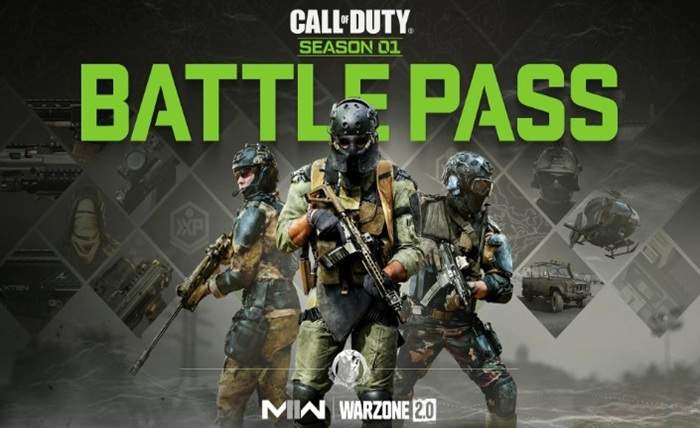
Every Call of Duty season opens the same way: a trailer, a hundred-item battle pass, and millions of players who will buy it without once calculating what it costs — not in dollars, which are printed on the box, but in hours, which are not. The current pass era (the sector-based system running across Black Ops 7 and Warzone in 2026) makes that calculation more interesting than it used to be. So let’s actually do the math the marketing skips.
How the Battle Pass Economy Is Designed
The modern pass is an engagement engine wearing a rewards costume, and its 2026 form is well tuned. Instead of a straight line of tiers, the current system arranges a hundred-plus items into a map of sectors — clusters of rewards you unlock with tokens earned through playtime, with some freedom to path toward the items you want. The design earns its keep three ways. The free track exists so the pass is always partially yours, keeping non-buyers inside the progression loop. The premium track (around ten dollars, with a deluxe tier above it for buyers who want instant unlocks) prices itself against the value of everything in the map — including enough premium currency to buy the next season’s pass, the industry’s classic retention loop: finish this pass and the next one is “free,” forever, as long as you never stop playing. And the token economy converts time into progress at a rate the designers, not the players, control — which is exactly where the real price hides.
The Real Hourly Cost of Completion
Publishers do not publish an “hours to complete” figure, and any article quoting one precisely is guessing — the honest approach is to show the method and let you run your own numbers. Completion cost is a simple product: the number of unlock steps in the season’s map, times the average playtime each step demands at your earn rate. The variables that actually move the answer are in the table below, and two of them dominate. Earn rate varies enormously between players — objective play, win rates and mode choice change tokens-per-hour more than raw skill does. And the challenge layer (next section) can shortcut a large share of the map for players who engage with it deliberately. Run the arithmetic for a typical full pass and an ordinary schedule, and the answer lands where veterans already sense it does: full completion is a multi-dozen-hour commitment across a season — a part-time hobby’s worth of evenings — comfortably achievable for the regular player it is designed around, and quietly out of reach for everyone else.
| Variable | Why it moves the total | How to measure yours |
|---|---|---|
| Unlock steps in the season’s map | Sets the raw distance — sectors × items per sector | Count them in the pass screen, week one |
| Your token earn rate per hour | The exchange rate between playtime and progress | Track tokens across three normal sessions |
| Challenge completion share | Dailies/weeklies pay far above the base rate | Note what share of your progress they drive |
| Double-XP window usage | Event windows multiply the earn rate | Check the season calendar; plan sessions into them |
| Mode and playstyle | Objective modes and longer matches typically pay better | Compare your rate across your two main modes |
| Season length remaining | The deadline that converts hours into hours-per-week | Divide remaining steps by remaining weeks |
The completion math — the variables that decide your hours (measure your own; averages published elsewhere are estimates)
Daily and Weekly Challenges: The Efficiency Layer
The challenge system is where the pass’s math becomes strategic, because challenges pay progression at rates the base grind never matches — a deliberate design that rewards ritual over volume. The daily layer is a small, refreshing contract: log in, complete the short list, bank the bonus — engineered to make the game a daily habit, and mathematically generous enough that skipping it is expensive. The weekly layer is the real accelerator: larger objectives whose combined payout can outweigh hours of unfocused play, which is why efficient pass players read the weekly list before queueing and pick modes to fit it. The strategic consequence cuts both ways. A player who plays modestly but ritually — dailies most days, weeklies cleared — will outpace a player with more raw hours and no system. But the ritual is also the design’s point: the challenge layer converts a rewards program into a habit program, and every player should notice, at least once, which of the two they are actually enrolled in.
Double XP Windows and Smart Scheduling
The final efficiency lever is the calendar. Every season runs promotional windows — weekends and events where progression earn rates multiply — and their effect on the completion math is blunt: an hour inside a double window is worth two outside it, which means when you play can matter as much as how much. The optimizer’s playbook is short and effective: bank flexible playtime toward announced windows, save the fattest weekly challenges to complete inside them, and treat the season’s final weeks — which reliably feature catch-up events and boosted rates — as the scheduled rescue for a pass that fell behind. There is also a liberating corollary hiding in that last point: the pass’s pacing assumes mid-season panic and prices in a late surge, so the player who falls behind in week four and quietly finishes during the closing catch-up window is not beating the system — they are using it as designed. The system punishes only two schedules: the sporadic player with no windows, and the completionist who never checks the calendar at all.
Who the Pass Is Actually Designed For
Put the math together and the pass’s target customer becomes visible with uncomfortable clarity. It is built for the regular: the player with several sessions a week, most weeks, who engages the challenge ritual and touches the event windows — for them, completion is comfortable, the economics are genuinely good value, and the returned premium currency makes the whole system feel free. It tolerates the heavy burst player, who can brute-force the map in concentrated stretches. And it quietly excludes the busy — the player with real interest and unpredictable hours, for whom the season’s deadline converts a rewards program into a treadmill that resets every few months regardless of how last season went. None of this is scandal; it is engagement design doing its job, and the pass remains one of gaming’s more honest ten-dollar purchases for its intended customer. The only real error is buying it for the customer you wish you were. The math in this article exists so you can check which one you are — before the season does it for you.
Finishing the Pass Without the Daily Grind
For the player who lands on the wrong side of that math — wants the pass’s contents, lacks the pass’s schedule — the options form a short ladder. Optimization is the free rung: the challenge ritual, the double-XP calendar and the late-season catch-up events together cut the real hour cost dramatically, and for many busy players that alone closes the gap. Triage is the honest rung: deciding which sectors of the map you actually want and pathing straight to them, letting completion go — the sector design explicitly permits this, and it is the adult answer more often than completionism admits. And for the specific seasons where neither is enough — the pass tied to a reward you genuinely want, in a season your calendar has already lost — targeted call of duty boosting exists as the direct conversion of money into the finished progression, the same trade the pass economy itself runs in the opposite direction. Whichever rung fits, the principle stays the one this whole article has priced: the pass costs ten dollars and a season of hours — and only one of those numbers was ever printed on the box.