
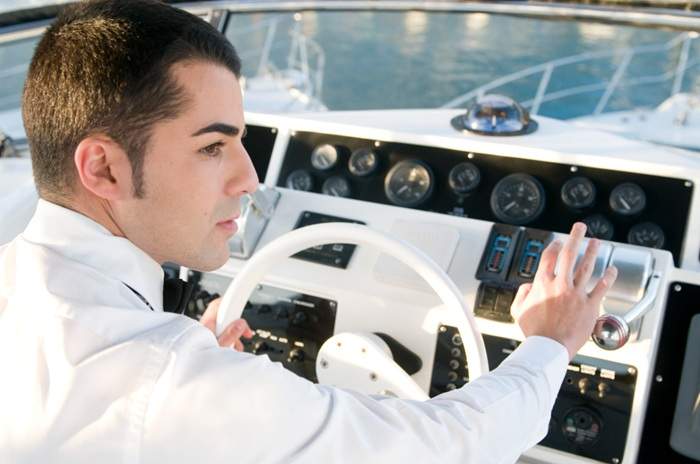
The helm of a modern boat has changed more in the past decade than in the preceding century. Where rows of mechanical toggle switches, analogue gauges, and standalone circuit breakers once defined the control environment of even premium vessels, today’s boats increasingly feature integrated digital systems that consolidate lighting, navigation, bilge management, safety monitoring, and communication into unified, responsive interfaces. The transition is being driven by the demands of boat owners and builders alike — for greater reliability, cleaner aesthetics, and the kind of seamless connected experience that modern technology makes possible. At the forefront of this shift is Cruzo boat control by Barantech, a system that embodies what the next generation of marine control genuinely looks like.
Understanding how marine control systems have evolved — and where the most significant current advances are taking the industry — helps boat builders and owners make informed decisions about the technology they specify and invest in. The gap between the best systems available today and the mechanical switch panels that remain standard on many vessels is not merely a matter of appearance. It is a fundamental difference in reliability, functionality, and the quality of the onboard experience.
From Mechanical Switches to Integrated Digital Platforms
Traditional marine control systems were built around individual electro-mechanical switches, each wired directly to the equipment it controlled. This approach was simple and comprehensible, but it created sprawling wiring harnesses that were difficult to install, harder to maintain, and highly susceptible to the corrosion and moisture ingress that the marine environment produces. Every additional circuit meant additional wiring, additional failure points, and additional complexity for the boatyard technicians responsible for installation and servicing.
The shift to digital switching — using data networks to carry control signals rather than dedicated power wires for each function — addressed this complexity at its root. A NMEA 2000 network can carry control signals for dozens of functions through a single bus, dramatically reducing wiring complexity and enabling the kind of flexible, reconfigurable control architecture that mechanical systems cannot approach. This network-based approach is the foundation on which modern integrated marine control systems are built.
The Role of the Control Interface in the Modern Helm
As the underlying architecture of marine control systems has shifted to digital networks, the control interface — the panel through which the operator interacts with the vessel’s systems — has become an increasingly important design element. A well-designed digital control panel does more than replace mechanical switches with electronic equivalents. It presents the operator with a unified, logical interface that makes the complexity of the vessel’s systems manageable and intuitive, reduces the cognitive load of operation, and contributes to the aesthetic quality of the helm environment.
Glass touch panels, configured to the specific layout and function set of the vessel they serve, achieve all of these goals simultaneously. Custom button arrangements, icon sets, and backlighting schemes create interfaces that are immediately comprehensible, visually cohesive with the vessel’s interior design, and operationally superior to the cluttered switch panels they replace. For premium boat builders, the control interface has become a key differentiator — a visible expression of the quality and thoughtfulness that defines their product.
Connectivity and Integration as Standard Expectations
The boating market’s expectations around connectivity have shifted fundamentally. Owners who manage their home environments through smartphone apps and connected devices bring those expectations onto the water — and they increasingly expect their vessel’s control systems to meet them. Remote monitoring, mobile app control, real-time alerts, and integration with multifunction displays are no longer features that distinguish premium systems from standard ones. They are becoming baseline expectations for any serious digital control platform.
Systems designed from the ground up for connectivity — with NMEA 2000 compatibility, mobile app integration, and the ability to interface with leading MFD platforms including Garmin EmpirBus, CZone, and Raymarine — deliver this connected experience as a native capability rather than an afterthought. The result is a vessel that responds to its owner the way modern connected devices do: intelligently, immediately, and from wherever the owner happens to be on board.
Reliability in the Marine Environment
The aesthetic and functional advantages of modern digital control systems are only meaningful if the underlying hardware is genuinely reliable in the conditions that marine use creates. Saltwater corrosion, UV degradation, vibration, spray, and the mechanical stress of life afloat are all forces that accelerate the failure of hardware not specifically engineered to resist them. The piezoelectric touch technology at the core of advanced marine control panels — with no moving parts, hermetically sealed housings, and solid metal construction — addresses these failure modes directly.
The elimination of moving parts is particularly significant in the marine environment. Every moving contact in a conventional switch is a potential site for corrosion, contamination, and eventual failure. A solid-state piezoelectric switch has no such sites — it is a sealed unit that responds to pressure without mechanical movement, and that continues to function reliably through millions of actuations under conditions that would have destroyed conventional hardware long before.
What the Next Generation of Marine Control Delivers
For boat builders assessing the current landscape of marine control technology, the advances represented by modern integrated systems are not incremental improvements on what came before. They are a qualitative shift in what is possible — in reliability, in functionality, in the quality of the onboard experience, and in the ability to meet the connected expectations of a new generation of boat owners. The marine control system that defines the standard for this generation combines piezoelectric hardware reliability, NMEA 2000 integration, and genuine design quality into a platform that is as compelling to install as it is to use.