
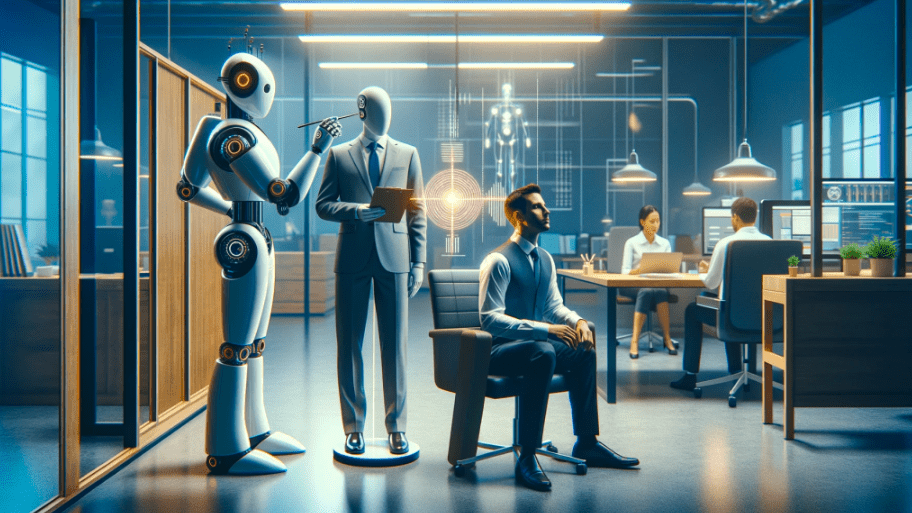
Film production has always been an exclusive club. The barriers to entry are formidable: expensive equipment, skilled crews, location permits, talent costs, post-production facilities, and the expertise to coordinate all these elements into coherent storytelling. Independent filmmakers often have brilliant creative visions but lack the resources to realize them. Student directors learn theory but struggle to build portfolios because production costs exceed their budgets. Even established professionals face constraints that force creative compromises when ambition exceeds available resources.
The democratization promise of digital technology has been repeated for decades, yet barriers remained stubbornly high. Affordable cameras and editing software helped, but the fundamental economics of production—coordinating people, places, and time—still required substantial investment. Seedance 2.0 represents something qualitatively different from previous technological shifts. It doesn’t just make existing production processes cheaper; it offers an alternative pathway to visual storytelling that sidesteps traditional production entirely for certain applications.
Pre-Visualization and Creative Development
Before discussing AI generation replacing traditional production, it’s worth examining areas where the technology enhances rather than substitutes conventional filmmaking. Pre-visualization—creating rough visual representations of planned scenes before committing to expensive production—has long been valuable in professional filmmaking but often remained crude due to cost and time constraints. Storyboards provide basic shot composition but lack motion and timing. Simple 3D pre-viz requires specialized skills and still produces obviously artificial results.
Seedance 2.0 elevates pre-visualization to new levels of sophistication. Directors can generate near-final-quality versions of planned scenes, experiencing not just composition but camera movement, performance energy, lighting mood, and even preliminary sound design. This allows far more informed creative decisions during the planning phase. A director uncertain about whether a scene should be shot in closeup or wide framing can generate both versions and judge which serves the story better. Complex camera movements can be previewed to ensure they achieve the intended emotional effect.
Independent Filmmaking and Portfolio Development
The transformative potential becomes clearer when considering independent filmmakers and emerging directors. Film schools teach cinematography, directing, and editing, but students typically lack resources to practice these skills at scale. Student films often compromise creative ambitions to fit minimal budgets. Graduates struggle to build portfolios demonstrating their capabilities because producing professional-quality samples requires funding they don’t have. This catch-22—needing work to get work—stifles many promising careers before they begin.
AI generation breaks this cycle by enabling portfolio development without traditional production budgets. An emerging director can create multiple short films demonstrating their storytelling abilities, visual style, and directorial voice. These AI-generated samples won’t replace traditionally filmed work in all contexts, but they serve crucial purposes: demonstrating creative vision, showing potential collaborators what you’re capable of, and attracting funding for future traditional productions.
The creative freedom this provides is profound. Without budget constraints, emerging filmmakers can attempt ambitious projects they could never afford traditionally. Want to create an epic fantasy short? Generate it. Science fiction requiring expensive effects? Generate it. Period piece requiring historical settings and costumes? Generate it. The limiting factor shifts from money to creative vision and technical skill in crafting effective prompts and guiding the generation process.
This democratization doesn’t guarantee success—talent, storytelling ability, and unique vision still matter enormously. But it ensures these qualities can be demonstrated regardless of economic background. Talented creators from less privileged circumstances can now compete with peers who have access to equipment and resources. The playing field levels, allowing talent rather than circumstance to determine who succeeds.
Short-Form Content and Proof of Concept
The film industry increasingly relies on proof-of-concept demonstrations for securing funding and studio interest. Producers want to see visual evidence that a concept works before committing millions to production. Traditionally, creating these proofs required significant investment—often tens of thousands for even short demonstrations. This created a barrier where interesting concepts struggled to get past the pitch stage without wealthy backers willing to fund proof-of-concept work.
Seedance 2.0 reduces proof-of-concept costs to near zero. A screenwriter with a compelling script can generate key scenes demonstrating the story’s visual potential, tone, and emotional impact. These generated samples serve as sophisticated pitch materials that help financiers understand the project far better than scripts or verbal descriptions alone. The ability to show rather than tell dramatically improves pitch success rates.
Short-form content production represents another application where AI generation provides complete solutions rather than just production assistance. Platforms like TikTok, Instagram Reels, and YouTube Shorts have created enormous demand for short video content. Traditional production struggles at this scale and speed—producing dozens or hundreds of short videos using conventional methods requires industrial-scale operations. AI generation handles high-volume short content efficiently, enabling individual creators to maintain content calendars that would require entire production teams traditionally.
The viral potential of short-form content means a single successful video can launch careers or projects. AI generation allows creators to produce sufficient volume that occasional viral hits become statistically probable. Rather than investing everything in one or two carefully produced pieces, creators can generate numerous attempts, learning what resonates with audiences and iterating rapidly based on feedback.
Genre Filmmaking and Niche Content
Certain film genres face particular production challenges that AI generation helps address. Horror films often require expensive practical effects, dangerous stunts, or elaborate creature designs. Science fiction needs futuristic sets, impossible locations, or complex visual effects. Fantasy requires magical elements, fantastical creatures, and otherworldly environments. These genre requirements typically restrict such filmmaking to well-funded productions or force independent creators into genres with lower production demands.
AI generation removes many of these genre barriers. Horror filmmakers can create disturbing imagery, impossible creatures, or surreal nightmare scenarios without practical effects budgets. Science fiction can depict advanced technology, alien worlds, or space environments without extensive CGI work. Fantasy can show magic, dragons, and enchanted forests without costly post-production. This enables genre experimentation and allows independent creators to work in categories previously dominated by studio productions.
Niche content with small but dedicated audiences also benefits significantly. Traditional production economics require projects to reach substantial audiences to justify costs. This pushes filmmaking toward mainstream appeal and makes serving niche interests economically questionable. When production costs approach zero, niche content becomes viable. Filmmakers can create highly specific content for dedicated communities without needing mass appeal to justify investment. This encourages diverse voices and perspectives that traditional economics discouraged.
The cultural impact of enabling niche content creation extends beyond individual projects. Underrepresented perspectives and stories can find expression without needing to convince risk-averse financiers of their mass appeal. Experimental approaches that might fail commercially can be attempted without catastrophic financial consequences. The result is richer, more diverse media landscape reflecting wider human experience rather than just profitable mainstream narratives.
Creative Collaboration and Remote Production
Traditional film production requires coordinating numerous people in specific locations at specific times. This geographic and temporal constraint limits collaboration possibilities. Directors in different countries can’t easily work together. Actors in different time zones face scheduling challenges. Creative teams must be physically present or use crude collaboration tools that poorly capture cinematic vision.
Seedance 2.0 enables asynchronous, distributed collaboration that wasn’t previously possible. A director in one country can generate initial scene versions, share them with collaborators elsewhere who provide feedback and suggest modifications, then regenerate with adjustments. This iterative creative process happens without anyone traveling or coordinating real-time schedules. The AI generation serves as a common creative language allowing distributed teams to develop shared vision.
The implications for international collaboration are particularly significant. Filmmakers from different cultures can combine perspectives and storytelling traditions without the logistics of international productions. A director in Asia might collaborate with a cinematographer in Europe and a writer in South America, each contributing their expertise to scenes that synthesize their combined vision. This cross-pollination of creative perspectives produces works that no single cultural context would generate independently.
Educational applications also benefit from remote collaboration capabilities. Film students can work with mentors anywhere in the world, receiving feedback on generated scenes and iterating based on expert guidance. Master classes can involve hands-on exercises where students generate scenes under instructor direction, learning cinematography and directing principles through immediate practical application rather than just theoretical instruction.
The Evolving Definition of Filmmaking
Perhaps the deepest impact of AI generation on film production isn’t economic or technical but conceptual—it challenges assumptions about what filmmaking is. Traditional filmmaking involves orchestrating complex physical reality toward creative vision: positioning cameras, directing actors, controlling lighting, capturing footage, then editing and finishing. This process connects directly to photography’s century-plus history of recording reality.
AI generation fundamentally differs—it’s synthetic creation rather than reality capture. The “film” being made doesn’t document anything that physically occurred but manifests vision directly into moving images. This is closer to animation or digital art than traditional filmmaking, yet it produces results resembling filmed reality. The lines between animation, visual effects, and live-action filmmaking blur into a continuum of techniques serving storytelling rather than discrete categories.
This conceptual shift challenges traditionalists while liberating new creative voices. Filmmaking need not require expensive equipment, location access, or coordination of numerous specialists. It can be intimate creative practice closer to writing or painting—individual vision manifested through technical skill and creative judgment but not requiring industrial-scale resources. This democratization opens filmmaking to wider participation while maintaining room for traditional approaches that value their specific qualities.
The film industry’s future likely includes both traditional and AI-generated production coexisting, serving different purposes and audiences. Traditional filmmaking retains advantages for certain applications and artistic goals. AI generation enables projects impossible otherwise while bringing new voices into visual storytelling. Both expand the boundaries of what’s possible in moving image narrative. The lowering of barriers that Seedance 2.0 represents doesn’t diminish traditional filmmaking’s value—it enlarges the tent, welcoming more creative voices into the conversation about how we tell stories through moving images.