Over the past year, generative AI tools have started to move beyond experimentation. What initially looked like a collection of standalone image generators and novelty video models is gradually becoming part of mainstream content production workflows.
Marketing teams, e-commerce operators, startup studios, and even smaller creative agencies are beginning to integrate AI-assisted generation into day-to-day operations. The shift is not only about producing content faster. In many cases, businesses are trying to reduce workflow fragmentation across design, editing, image generation, and video production, with solutions like Gemini Omni AI Visual Storytelling becoming part of these evolving creative workflows.
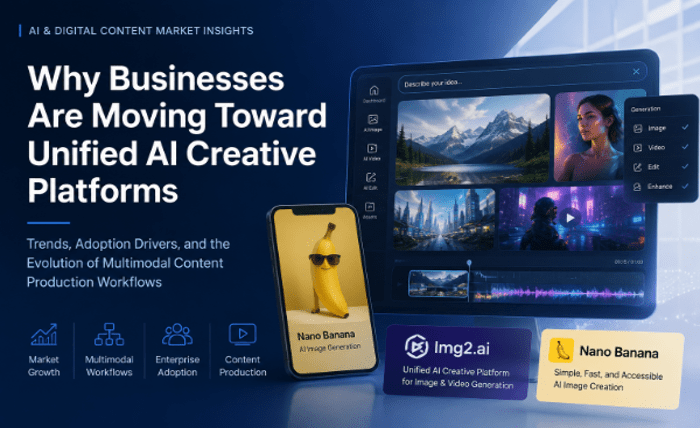
This transition is contributing to the rise of unified AI creative platforms that combine multiple generation models and multimodal workflows within a single environment.
From Isolated AI Tools to Integrated Workflows
One of the more noticeable changes in the market is that businesses are becoming less interested in isolated AI capabilities and more focused on operational efficiency.
A year ago, many teams were testing individual tools separately — one platform for image generation, another for editing, and another for video creation. While the quality of AI output improved rapidly, workflow management often became more complicated rather than simpler.
As production demands increased, especially for social media and short-form video content, the limitations of fragmented tooling became more apparent. Creative teams increasingly needed systems that could support multiple formats and reduce the amount of switching between platforms.
This is one reason why integrated AI environments are attracting more attention across the digital content sector.
Platforms such as Image to Image & Video AI reflect this broader market direction. Rather than positioning AI generation as a single-purpose feature, the platform combines image and video generation models into a unified workflow structure designed for broader creative production use cases.
At the same time, the market is also expanding toward more lightweight and accessible creative experiences. Platforms including Imagvio Nano Banana AI platform represent another side of the industry trend, where simplified AI-assisted image workflows are becoming increasingly attractive to creators looking for faster and lower-friction visual production environments.
These approaches are different in positioning, but both illustrate how the AI creative ecosystem is diversifying beyond single-model experimentation.
Marketing and E-Commerce Are Driving Adoption
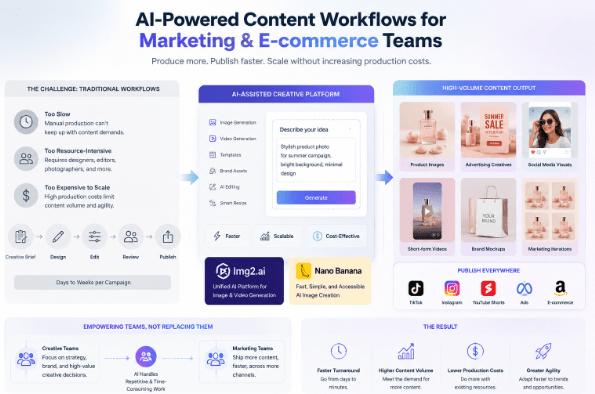
The strongest commercial demand for AI creative platforms currently appears to be coming from marketing and e-commerce teams.
The pressure to produce large volumes of visual content has increased significantly over the last two years. Brands are expected to maintain constant activity across TikTok, Instagram, YouTube Shorts, paid advertising campaigns, and e-commerce marketplaces simultaneously.
For many businesses, traditional production pipelines are too slow or too resource-intensive to sustain this level of output consistently.
AI-assisted workflows are increasingly being used to accelerate:
- Product image generation
- Advertising creatives
- Social media visuals
- Short-form video concepts
- Brand mockups
- Marketing iterations
Importantly, businesses are not necessarily replacing creative teams. Instead, many organizations appear to be restructuring production pipelines around AI-assisted generation in order to reduce turnaround time and increase content scalability.
This operational shift is becoming especially visible among smaller teams that need to maintain high publishing frequency without significantly expanding production costs.
Multimodal AI Is Becoming a Core Market Trend
Another major development is the growing importance of multimodal generation.
Earlier generations of AI creative tools were typically focused on one format — text, images, or video. The market is now moving toward systems capable of handling multiple forms of media within connected workflows.
This includes combinations such as:
- Text-to-image
- Image-to-video
- AI-assisted editing
- Prompt-based visual modification
- Multi-model generation pipelines
The demand for these workflows is increasing because businesses no longer think about content production in isolated categories. A marketing campaign, for example, may require static images, short-form videos, promotional graphics, and social assets simultaneously.
As a result, platforms capable of supporting broader multimodal production environments are likely to become increasingly relevant within the next phase of the AI content market.
The Market Is Maturing Beyond Early Hype
The generative AI sector is also entering a more mature phase compared to the initial surge of public interest seen in earlier adoption cycles.
Conversations within the industry are gradually shifting away from purely experimental discussions toward more practical questions:
- Can these tools reduce production bottlenecks?
- Can they improve operational efficiency?
- Can they support scalable publishing workflows?
- Can smaller teams maintain competitive output levels?
This change in focus is influencing how AI platforms position themselves in the market. The emphasis is increasingly moving toward workflow integration, usability, scalability, and production efficiency rather than standalone model novelty.
In many ways, the next stage of competition may be determined less by individual model performance and more by how effectively platforms integrate AI generation into real production environments.
Outlook
The market for AI-assisted creative infrastructure is likely to continue expanding as digital publishing demands increase across industries. Businesses are producing more visual content than ever before, while simultaneously facing pressure to reduce operational complexity and production timelines.
As the ecosystem matures, platforms that combine accessibility, workflow integration, and multimodal generation capabilities may become increasingly important across both enterprise and creator-focused segments.
Rather than relying on disconnected AI tools, many organizations now appear to be moving toward more centralized creative environments capable of supporting image, video, and AI-assisted production workflows within a single operational structure.