
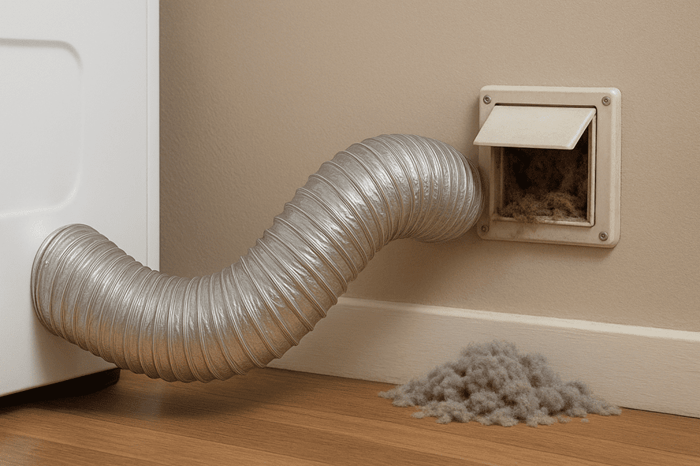
Of all the routine maintenance tasks that homeowners tend to overlook, dryer vent cleaning carries consequences that are disproportionate to the modest effort and cost required to address it. Lint — the fine fibrous material shed by clothing during the drying cycle — accumulates in dryer vents with every load of laundry. The lint trap catches a significant proportion of it, but a meaningful percentage bypasses the trap and deposits itself in the vent duct that exhausts hot air from the dryer to the exterior of the home. Over time, this accumulation restricts airflow, causes the dryer to overheat, and creates a fire hazard that is directly responsible for thousands of residential fires every year. Scheduling regular professional dryer vent cleaning service is one of the most straightforward and high-value safety investments a homeowner can make.
The risk is not hypothetical or rare. Dryer fires are among the most common causes of home fires in the United States, and the overwhelming majority of them are attributable to lint accumulation that professional cleaning would have prevented. Understanding how and why this risk develops — and what the warning signs of a dangerously clogged vent look like — helps homeowners act before a hazard develops rather than after an incident occurs.
How Lint Accumulation Becomes a Fire Hazard
Lint is extremely combustible. It is composed of fine fibres with a large surface area relative to their mass — exactly the physical characteristics that make a material ignite easily and burn rapidly. In a dryer vent that is partially or fully blocked by lint accumulation, the hot air that the dryer produces cannot exhaust efficiently. The dryer’s heating element continues to generate heat, the airflow that would carry that heat away is restricted, and internal temperatures rise to levels that can ignite the lint directly or damage the dryer’s components in ways that create additional ignition risks.
The vent duct itself — running through walls and ceilings to the exterior — is where the most significant accumulation typically occurs, and it is the section that the homeowner cannot inspect or clean without professional equipment. Flexible duct sections, bends, and long duct runs all create locations where lint collects and compacts over time. A vent that appears to be exhausting normally from the outside may be substantially blocked in its interior runs — creating a fire hazard that is entirely invisible without professional inspection and cleaning.
Warning Signs That a Dryer Vent Needs Professional Attention
Several observable signs indicate that a dryer vent has accumulated enough lint to warrant immediate professional cleaning. Clothes that take longer than a single cycle to dry fully — particularly heavy items like towels and denim — are the most reliable indicator of restricted airflow. A dryer that is hot to the touch on its exterior surface, or that produces a burning smell during operation, is signalling heat accumulation that represents an immediate hazard. Laundry that emerges from the dryer hotter than usual, or a laundry room that becomes noticeably warm during drying cycles, both point to exhaust restriction that needs to be addressed.
The lint trap filling more rapidly than usual is another useful indicator — it can suggest that lint is being pushed back from a blocked vent rather than exhausted normally. Any visible lint accumulation around the exterior vent opening, or a flap that does not open fully during dryer operation, confirms that the vent system requires professional attention. None of these signs should be deferred — each represents a fire risk that worsens with every subsequent drying cycle.
The Professional Cleaning Process
Professional dryer vent cleaning goes considerably further than the homeowner can achieve with a brush kit from a hardware store. Trained technicians use specialised rotary brush systems and high-powered vacuum equipment to dislodge and remove lint from the full length of the vent duct — including the sections within walls and ceilings that consumer equipment cannot effectively reach. The exterior vent cap is inspected and cleaned, the duct connections are checked for leaks or damage, and the overall vent system is assessed for configuration issues — such as excessive length or sharp bends — that contribute to accumulation.
A complete professional cleaning typically takes less than an hour and restores the dryer to full efficiency — reducing drying times, lowering energy consumption, and eliminating the fire hazard that lint accumulation creates. Many homeowners notice an immediate improvement in dryer performance following a professional clean, which itself confirms how significantly the vent had been restricted.
How Often Should Dryer Vents Be Professionally Cleaned
The appropriate frequency for professional dryer vent cleaning depends on how heavily the dryer is used and the configuration of the vent system. For a typical household using the dryer regularly, annual professional cleaning is the standard recommendation — and more frequent cleaning is warranted for households with high laundry volumes, pets whose fur contributes additional lint, or vent configurations with multiple bends or long duct runs that accumulate lint more rapidly.
The cost of professional dryer vent cleaning is modest relative to the fire risk it eliminates and the energy savings it delivers through restored dryer efficiency. For Philadelphia area homeowners looking to protect their homes and families with a maintenance investment that genuinely pays for itself, scheduling annual service with certified dryer vent cleaning experts is among the most straightforward and consequential decisions available to them.